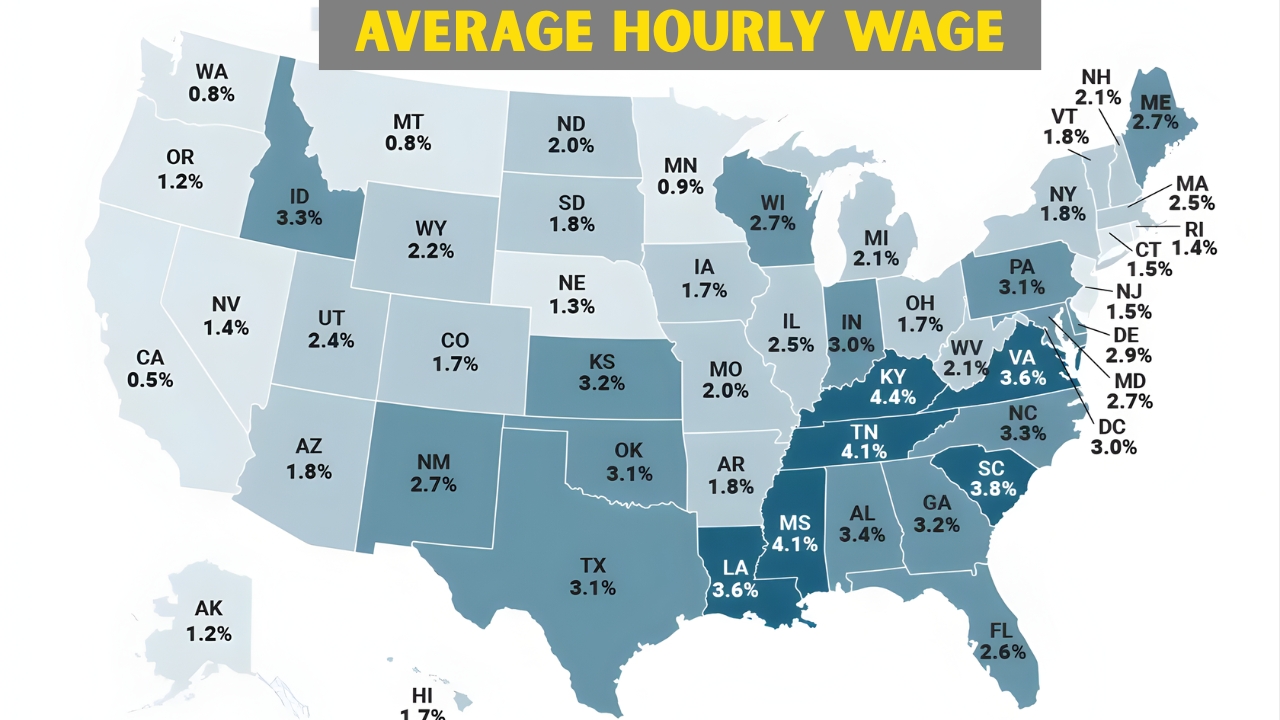
Average hourly wages across the United States vary significantly by state, influenced by factors such as industry composition, cost of living, and local labor market conditions. Understanding which states offer the highest average wages can help workers, job seekers, and policymakers gauge economic health and opportunities.
Top States with the Highest Average Hourly Wages
-
District of Columbia leads the nation with the highest average hourly wage of about $54.23, fueled by federal government, professional, and tech sector jobs.
-
Other top-paying states include Washington ($42.30), Massachusetts ($41.74), California ($41.09), and Minnesota ($39.53), each offering wages well above the national average.
-
These states tend to have strong economies focused on technology, finance, and professional services, supporting higher-than-average earnings.
States with the Lowest Average Hourly Wages
-
Southern states such as Mississippi ($28.10), Louisiana ($29.71), Arkansas ($29.62), and New Mexico ($29.14) record the lowest average wages, reflecting industries like agriculture, hospitality, and retail.
-
The wage gap between the highest and lowest states exceeds $24 hourly, underscoring regional disparities.
Average Hourly Wage Data by State (2025 Estimates)
| State | Avg. Hourly Wage (USD) | State | Avg. Hourly Wage (USD) |
|---|---|---|---|
| District of Columbia | $54.23 | Oregon | $37.11 |
| Washington | $42.30 | Arizona | $34.91 |
| Massachusetts | $41.74 | Texas | $34.28 |
| California | $41.09 | Florida | $34.56 |
| Minnesota | $39.53 | Georgia | $34.64 |
| New York | $38.96 | North Carolina | $34.06 |
| Maryland | $36.09 | Wisconsin | $34.12 |
| Rhode Island | $36.43 | Michigan | $33.03 |
| Virginia | $36.33 | Ohio | $33.00 |
| New Hampshire | $35.29 | Indiana | $32.17 |
| Utah | $35.00 | Pennsylvania | $32.52 |
| Vermont | $35.14 | Delaware | $32.88 |
| Colorado | $39.13 | Kentucky | $30.17 |
| Nebraska | $32.65 | Oklahoma | $30.96 |
| Alabama | $31.48 | South Carolina | $32.18 |
| Kansas | $31.48 | Maine | $32.24 |
| Wyoming | $31.72 | Louisiana | $29.71 |
| Iowa | $30.36 | New Mexico | $29.14 |
| Tennessee | $31.08 | West Virginia | $29.88 |
| Arkansas | $29.62 | Mississippi | $28.10 |
Factors Contributing to Wage Differences
-
Higher-wage states tend to have concentrated high-tech industries, financial hubs, and well-funded public sectors.
-
Cost of living is usually higher in these regions, often offsetting wage advantages.
-
Lower-wage states typically rely on lower-paying industries and experience economic challenges like lower labor union density.

Impact on Workers and Job Seekers
-
While average wages are higher, workers should also consider cost of living and quality of life factors.
-
Remote work trends can allow workers in low-wage states to access higher pay in top markets without relocating.
-
Regional wage disparities highlight the importance of targeted economic development policies.
FAQs
Q1: Which U.S. state has the highest average hourly wage?
The District of Columbia tops the list with approximately $54.23 per hour.
Q2: Why are wages lower in Southern states?
Economic structure focuses on agriculture, hospitality, and lower-paying retail jobs.
Q3: How do cost of living differences affect wage benefits?
Higher wages in some states are often balanced by higher housing, transportation, and healthcare costs.
