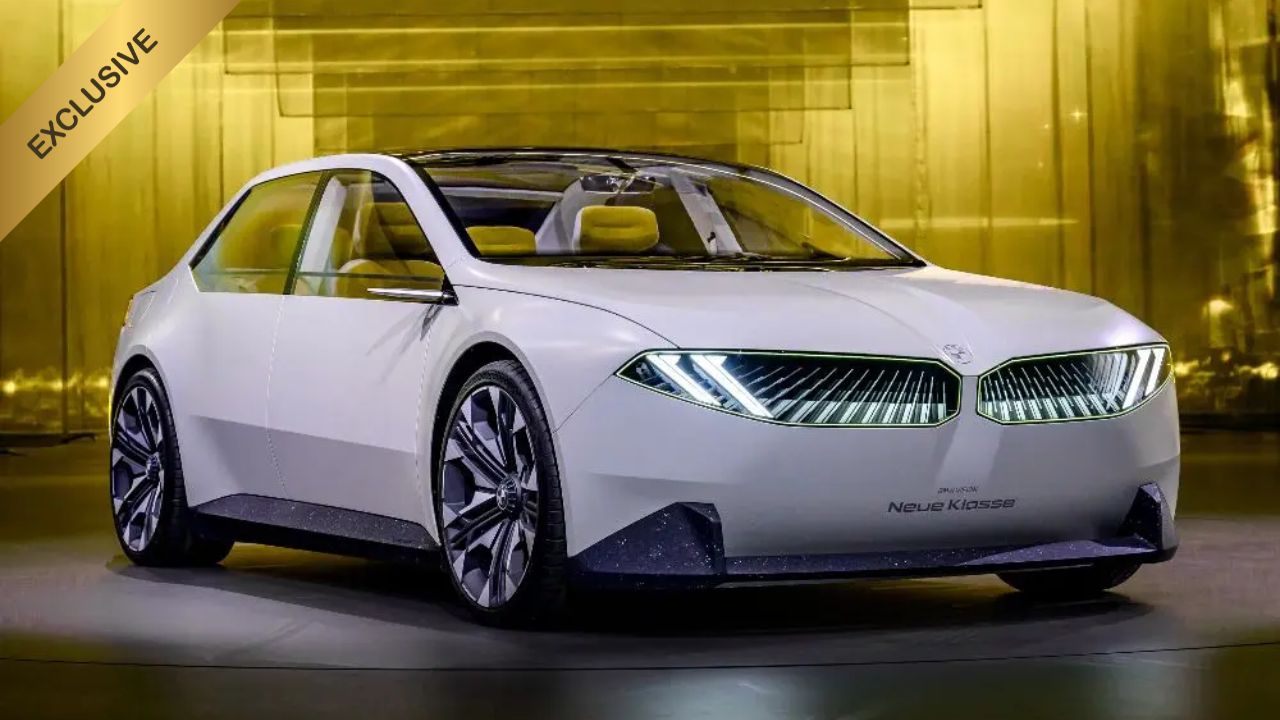
BMW Neue Klasse is the company’s dedicated next-generation electric platform and vehicle family, designed to transform how its cars are powered, built and experienced from 2025 onward. It brings together new Gen6 batteries, advanced software, powerful computing hardware and a fresh design language that will underpin everything from compact sedans to SUVs and possibly future performance models.
Neue Klasse Platform Explained
Neue Klasse is BMW’s first ground-up, EV-first architecture, created to replace today’s mix of adapted combustion platforms with a single modular “toolkit” optimized around batteries and electric motors. The platform is engineered to scale across multiple sizes and body styles, while still allowing BMW to keep rear-biased driving dynamics and 50:50 weight distribution where possible.
Structurally, the high-voltage battery becomes part of the body itself in a “pack-to-open-body” concept, improving stiffness and saving weight by eliminating traditional battery modules. This integration gives designers more freedom to lower the floor, improve packaging and enhance crash performance versus earlier EVs built on converted ICE platforms.
Gen6 Batteries, Range and Charging
Neue Klasse models debut BMW’s sixth-generation eDrive system, with new cylindrical lithium-ion cells that boost energy density by more than 20 percent compared with current prismatic packs. Depending on model, BMW is targeting up to 30 percent more range, up to 30 percent faster charging and around 25 percent higher overall efficiency than its existing electric lineup.
Three main battery capacities are planned: roughly 75 kWh, 90 kWh and 105 kWh, paired with an 800-volt electrical architecture supporting ultra-fast DC charging. BMW quotes potential ranges of up to about 800–900 km on certain variants (WLTP), with the ability to add around 300 km of range in about ten minutes at a high-power charger, turning “every plugged-in minute into useful kilometres.”
Key Neue Klasse Technical Targets
Feature
Indicative Neue Klasse Value/Claim
Battery cell type
Cylindrical Gen6 lithium-ion cells
Battery capacities (approx.)
75 / 90 / 105 kWh packs
Energy density gain
>20% vs Gen5 prismatic cells
Range improvement
Up to +30% vs current BMW EVs
Max WLTP range (selected models)
Up to ~800–900 km target
Charging architecture
800 V, up to ~400 kW DC target
10-minute fast charge
About 300 km added range
Models Built on Neue Klasse
The first production Neue Klasse vehicles are scheduled to launch from 2025, led by a new iX3-class electric SUV and a 3-Series-sized i3 sedan previewed by the Vision Neue Klasse concepts. By 2028, BMW plans at least six Neue Klasse-based models, covering core global segments and including Touring (wagon) and coupe-style SUVs alongside the initial sedan and SUV pair.
Production will ramp up in new and existing plants, with the Debrecen factory in Hungary dedicated to Neue Klasse from launch and additional capacity planned in China, Mexico, Europe and the US. This global footprint supports BMW’s aim to make EVs a larger share of its sales while managing costs and regional demand variations.
Digital Tech, “Superbrains” and Interfaces
Neue Klasse is as much a software and computing revolution as a mechanical one, centered on four high-performance domain computers that BMW calls “superbrains.” These units handle powertrain control, driver assistance, infotainment and body functions, replacing dozens of separate control modules with a zonal electrical architecture that is up to 30 percent lighter.
On the user side, the new BMW Panoramic iDrive stretches information across the base of the windscreen as a full-width head-up display, paired with a simplified central screen and BMW Operating System X. The goal is to reduce distraction by projecting key data in the driver’s natural line of sight while enabling deep personalization and frequent over-the-air feature updates.
Driving Experience and Sound
BMW emphasizes that Neue Klasse will preserve its traditional focus on engaging dynamics, supported by Gen6 eDrive motors tuned for responsive torque delivery and precise control. Chassis advances include more aerodynamically efficient bodies (about 20 percent drag reduction), new friction-optimized brakes and tires, and advanced thermal management to sustain performance under repeated hard use.
Sound and feel are also being reimagined: BMW’s “HypersonX” and related projects explore curated, adaptive soundscapes that respond to throttle input and driving mode, aiming to give electric models a distinctive acoustic identity without faking combustion noise. Together with accurate steering and carefully calibrated suspension, Neue Klasse cars are intended to feel recognizably like BMWs, even as they move fully into the electric era.
Beyond performance, Neue Klasse is designed around circularity, reducing lifecycle emissions through cleaner battery production, higher use of secondary materials and more energy-efficient factories. BMW targets up to 50 percent lower battery production costs and substantial CO₂ savings by using green power in cell plants and optimizing logistics.
Vehicles themselves are engineered for easier disassembly and material recovery at end of life, helping close the loop for critical resources like nickel, lithium and cobalt. Combined with the long-range, high-efficiency hardware, this strategy positions Neue Klasse as both a technological and environmental cornerstone of BMW’s long-term transformation.