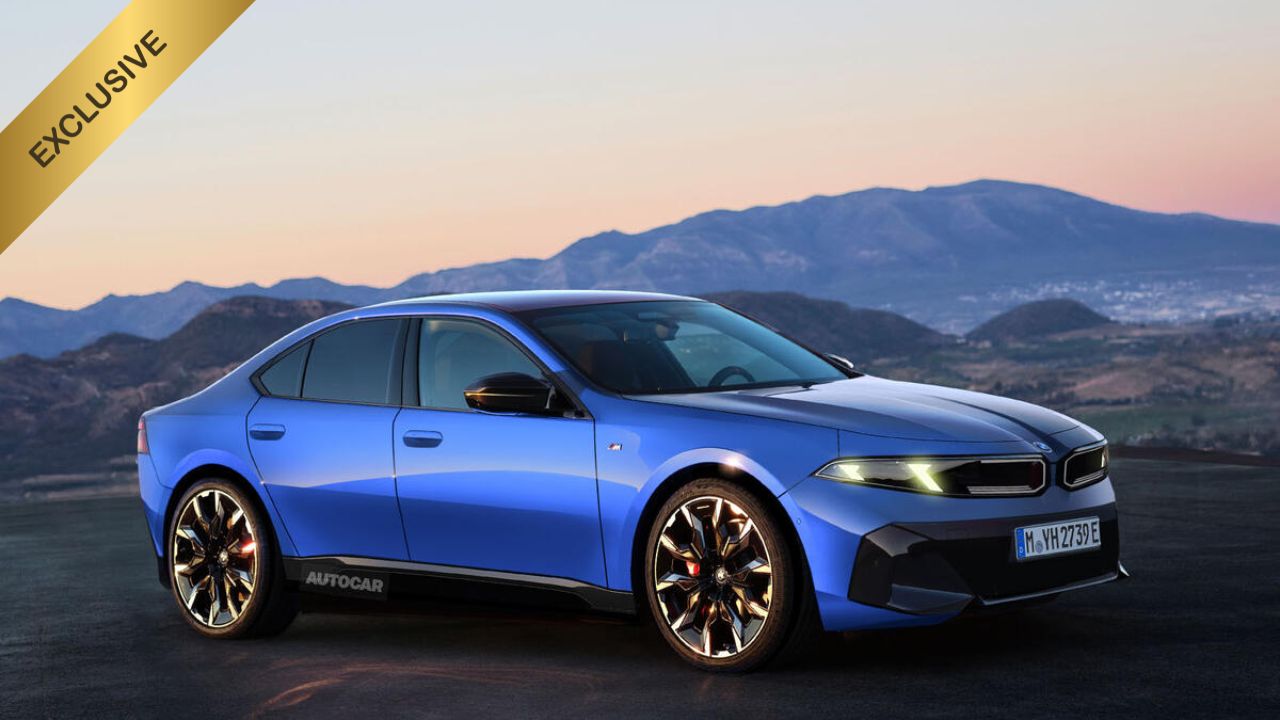
BMW is preparing a 2026 reboot of the i3 as a global all-electric sedan, evolving the name from its earlier city car and China-only 3-Series–based EV into a full Neue Klasse–based sport sedan aimed directly at the Tesla Model 3 and other mid-size rivals. Unlike the quirky original hatchback, the new i3 will sit in the heart of BMW’s lineup as the first fully electric 3-Series successor, with long-range capability, ultra-fast charging and a strong focus on driving dynamics.
From City EV To Neue Klasse Sports Sedan
The original i3 hatchback bowed out of global production in 2022, but BMW kept the badge alive in China on the i3 eDrive35L, a long-wheelbase 3-Series sedan with a 70.3 kWh battery and up to 526 km CLTC range. For 2026, BMW pivots the i3 name again, this time onto a brand-new model built on the dedicated Neue Klasse EV platform rather than adapted from the CLAR architecture that underpins today’s 3-Series.
Production is expected to begin at BMW’s new Debrecen plant in Hungary, which has been established specifically to manufacture Neue Klasse vehicles using more recycled materials and cleaner processes. BMW positions this i3 as the first globally sold electric 3-Series, to be sold alongside updated combustion and hybrid 3-Series variants during a transition period in the second half of the decade.
Design Language And Aerodynamics
The 2026 i3 sedan is heavily influenced by the Vision Neue Klasse concept revealed in 2023, adopting a clean three-box silhouette with a fastback-style roofline and strong shoulder lines for a modern, athletic stance. Signature cues such as the reinterpreted kidney grille, slim LED or laser-style headlights and a crisply cut Hofmeister kink at the C-pillar connect it clearly to BMW’s heritage while optimizing aero efficiency.
Compared with the China-market i3 eDrive35L, which measures 4,872 mm long with a 2,966 mm wheelbase and a drag coefficient of 0.24, the Neue Klasse i3 is expected to maintain similar footprint but improve aero further to unlock maximum range. Wheel designs, flush glass, and subtle spoilers are all tuned to reduce drag and wind noise, supporting long-distance cruising comfort.
Battery, Range And Charging Performance
BMW targets headline-grabbing range figures for the 2026 i3, with internal projections and supplier leaks suggesting up to around 800 km on certain test cycles using latest-generation nickel manganese cobalt (NMC) packs similar to those previewed on the upcoming iX3. Earlier Chinese-market i3 sedans already deliver 526 km CLTC range from a net 66.1 kWh battery, so the Neue Klasse car’s larger pack and more efficient platform are expected to raise those numbers substantially in global trim.
Charging will benefit from an 800-volt electrical architecture and peak DC rates around 350–400 kW, allowing major top-ups to be completed in well under 30 minutes on compatible high-power chargers. BMW also promises more efficient recuperation and smarter thermal management so that fast-charging performance holds consistently on long drives rather than dropping sharply after one session.
Key Technical Snapshot (Current i3 Sedan vs Expected 2026 Reboot)
Item
China i3 eDrive35L (G28)
2026 Neue Klasse i3 (expected)
Platform
CLAR-based 3-Series LWB
Neue Klasse dedicated EV
Battery (gross/net)
70.3 / 66.1 kWh
~100+ kWh class (target)
Range (test cycle)
526 km CLTC
Up to ~800 km on selected cycles
Motor layout
Single rear motor, 286 hp
RWD single and dual-motor AWD
0–100 km/h
6.2 s
Quicker in top trims (claimed)
Peak DC charge rate
Fast-charge capable (unspecified)
Up to 350–400 kW, 800 V system
Production base
China only
Global (Hungary and others)
Powertrains And Driving Dynamics
Early information points to multiple power levels for the new i3, from an efficient rear-drive base model to more powerful dual-motor variants that could rival today’s i4 M50 in straight-line pace. The current i3 eDrive35L already offers 286 hp and 400 Nm to the rear wheels, with 0–100 km/h in 6.2 seconds, so the Neue Klasse i3 should comfortably beat that, particularly in performance-oriented trims.
BMW’s chassis engineers are focusing on weight distribution, steering feel and suspension tuning to ensure the i3 still feels like a true 3-Series to drive, despite its silent electric powertrain. The battery’s position low in the floor helps deliver a low center of gravity, while adaptive dampers and rear-axle steering are expected on higher trims to combine agility with stability at motorway speeds.
Interior, Infotainment And Digital Experience
Inside, the 2026 i3 will showcase BMW’s next-generation digital cockpit with a broad, curved display and minimalist physical controls, inspired by the Vision Neue Klasse’s simple, driver-centric layout. High-resolution instrumentation, a central touch interface and an advanced head-up display with augmented-reality navigation will work together so that key information appears directly in the driver’s line of sight.
Recycled and low-impact materials will play a larger role, reflecting BMW’s sustainability goals without sacrificing the premium touch and durability expected in a 3-Series-class sedan. Spacious rear legroom similar to the long-wheelbase G28 car (2,966 mm wheelbase) should continue, making the i3 suitable as both a family car and a business limousine in markets where passengers often sit in the back.
Advanced Assistance And Connectivity Features
The i3 reboot will integrate BMW’s latest driver-assistance systems, including adaptive cruise with lane-centering, automated lane changes, and parking assistance that can memorise frequent manoeuvres in tight spaces. Hardware such as high-resolution cameras, radar and possibly lidar on some trims will support Level 2+ functions on highways where regulations permit.
Connectivity will expand beyond current iDrive, offering over-the-air software updates, app-based route planning with charging stops, and integration with smart-home ecosystems so that charging or cabin pre-conditioning can be scheduled easily. BMW is also expected to refine its energy-management coaching, helping drivers optimise range through real-time feedback and eco-routes.
Reports indicate a global reveal around 2026, following previews and teasers tied to the launch of the Neue Klasse iX3, with sales beginning first in Europe and China before rolling out to other markets like North America and Australia. The new i3 will sit alongside the i4 for a period but is intended to become the core electric 3-Series offering, likely priced competitively against Tesla Model 3, Hyundai Ioniq 6 and Mercedes-Benz EQE entry trims.
By blending long range, fast charging and a strong emphasis on driving pleasure, the 2026 BMW i3 reboot aims to redefine what a compact executive EV sedan can be, carrying the 3-Series spirit into an all-electric era while finally turning the i3 name into a true global mainstay of BMW’s lineup.