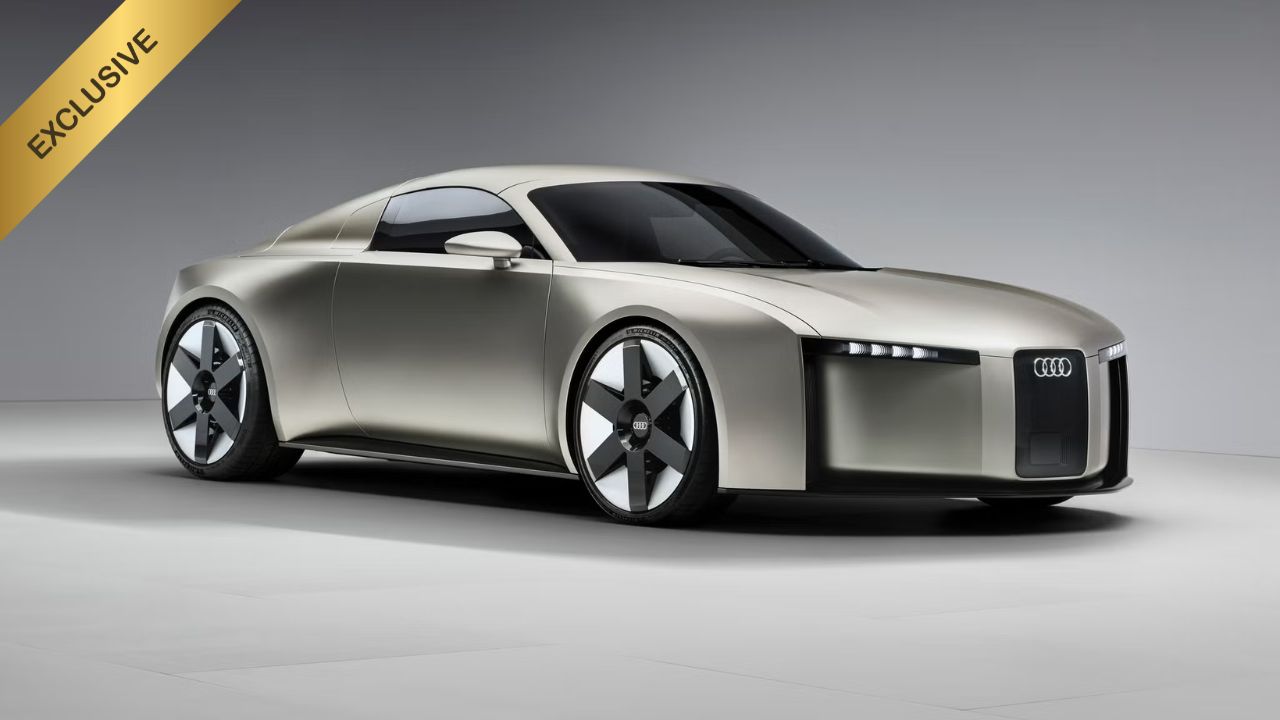
Audi TT successor is expected to be a compact, all-electric sports car that preserves the TT’s emotional character while adopting a far more modern platform, design language and digital user experience. Although final details are still emerging, early information and leaks point to a low, agile coupe or roadster positioned as an attainable alternative to high-end EV sports cars from Porsche and others.
Design Language: Evolving an Icon
The original TT became a design icon by combining simple geometric forms with a clean, almost architectural presence, and Audi insiders suggest the electric successor will echo that purity rather than merely copying current family styling cues. Expect short overhangs, a cab-forward stance and a tightly drawn roofline, with surfacing that emphasizes aerodynamics over ornament to maximize efficiency and range.
Spy shots and concept leaks hint at a more aggressive nose and a wider track, giving the new car a planted, mid-engine-like stance even though its powertrain will be fully electric. Flush door handles, active aerodynamic elements and intricately detailed LED or OLED lighting signatures are likely, underscoring the car’s role as a rolling technology showcase.
Platform, Battery and Layout
Most reports link the TT successor to a shared Volkswagen Group program that also underpins the next-generation Porsche 718 Boxster and Cayman EV, as well as other niche performance models. That means a dedicated sports-car platform with batteries mounted behind the occupants rather than in a tall skateboard floor, aiming to preserve the low seating position and agile handling that enthusiasts expect.
While Audi has multiple EV architectures such as MEB and PPE, the TT replacement is more likely to use a bespoke or heavily adapted version tied to Porsche’s smaller electric sports-car program rather than a high-riding crossover platform. This approach should allow a lower roofline, lighter overall mass and more responsive dynamics than typical volume-oriented electric models.
Predicted Power, Range and Performance
Concrete figures are still under wraps, but early reporting and educated estimates suggest a broad power spread designed to make the car approachable yet genuinely quick. A base single-motor rear-drive model could target roughly 250–300 horsepower, with a dual-motor quattro variant stepping up toward 400–470 horsepower and sub-four-second 0–60 mph capability.
Battery capacity will likely fall in the 70–85 kWh range to balance range, weight and packaging, with WLTP ranges that could exceed 500 km and real-world EPA-style figures likely in the 250–300 mile band depending on wheel size and drivetrain. Fast-charging support around 270–300 kW, in line with other Volkswagen Group performance EVs, would allow short stops on road trips and track-day use without long cooldowns.
Core Expectations at a Glance
Aspect
Audi TT Electric Successor (Expected)
Platform/Program
Shared VW Group sports-EV project with Porsche 718 EV links
Drivetrain Layout
RWD standard, optional dual-motor quattro AWD
Estimated Power
~250–300 hp base; up to ~400–470 hp dual-motor
Battery Positioning
Behind seats for low seating and mid-engine feel
Target Range
Approx. 250–300 miles / 400–480 km depending on spec
Launch Timing
Concept in 2025; production expected around 2027
Interior, Tech and Driver Experience
Inside, the TT successor is likely to evolve Audi’s driver-centric cockpit with a slim instrument binnacle, a wide digital display and minimal physical buttons, but with careful attention to materials so it still feels like a focused sports car rather than a generic EV. Expect advanced voice control, over-the-air updates and integration with Audi’s latest infotainment platform, alongside configurable driving modes that adjust steering weight, throttle mapping and artificial sound.
Audi executives have spoken openly about making future electric sports cars “highly emotional,” which suggests the use of synthesized powertrain sounds and even simulated gearshift steps to create a richer sense of connection than a silent, single-speed drivetrain alone can offer. Optional bucket seats, track telemetry functions and augmented-reality head-up displays could reinforce the car’s role as both a weekend toy and a tech flagship.
Positioning in Audi’s Line-Up
The new electric coupe is expected to sit between the old TT and the discontinued R8 in size, price and performance, giving Audi a halo sports model that is still attainable for committed enthusiasts. Pricing speculation places it above the typical compact premium coupe yet below six-figure supercars, positioning it as a “bargain Porsche EV” alternative sharing significant hardware with mid-engine electric 718 derivatives.
At the same time, Audi is using this project to sharpen its performance identity in the electric era after several years in which the brand’s EV push has focused mostly on crossovers and sedans. The TT successor therefore carries not only emotional weight with fans but strategic importance as an attention-grabbing showcase in showrooms.
A concept preview of the TT successor is expected at the IAA Mobility Show in Munich, with production planned within roughly two years of its debut if supplier and platform schedules remain on track. However, delays tied to the Porsche 718 EV’s development and battery-supply issues have already pushed some Volkswagen Group sports-EV timelines back, so a market launch around 2027 is a realistic working assumption rather than a fixed promise.
Even with those uncertainties, the direction is clear: Audi wants a compact electric sports car that feels intentional and exciting, not just an electrified version of an existing model. If the brand successfully blends iconic TT design cues, shared Porsche-grade hardware and an engaging digital driving experience, its new electric sports car could become one of the most compelling enthusiast EVs of the decade.