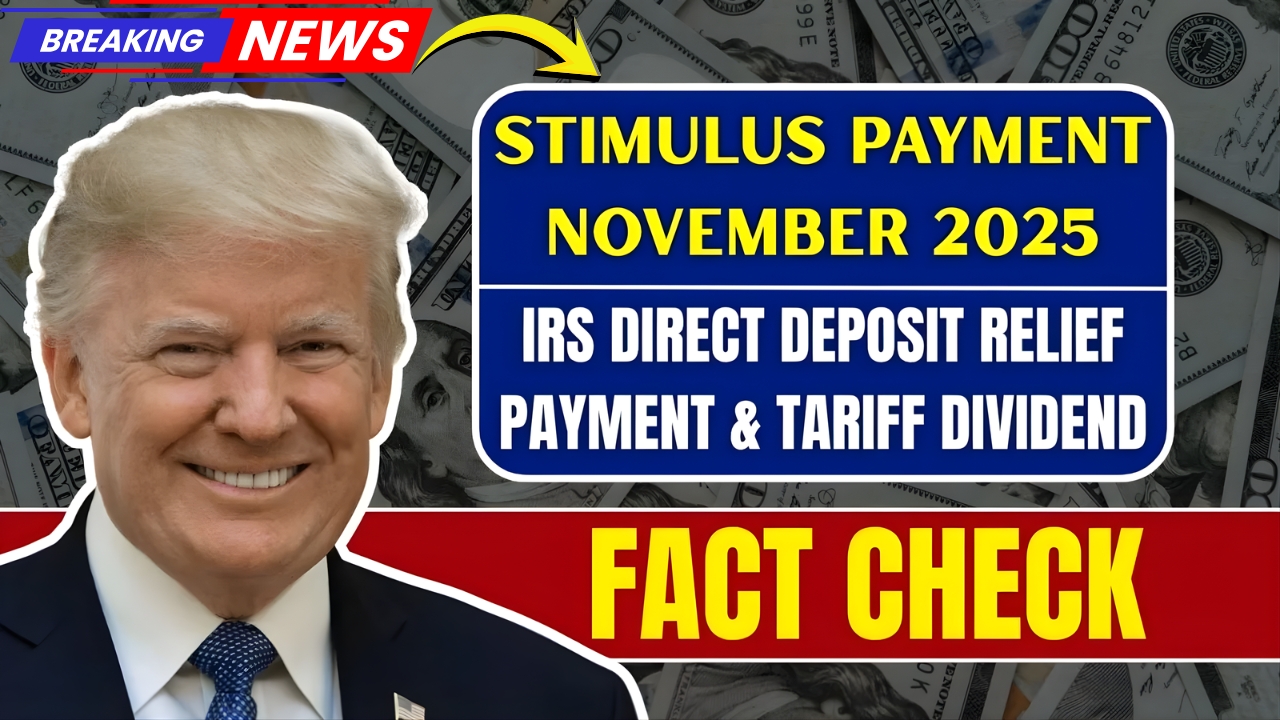
No federal stimulus checks, IRS direct deposit relief payments, or tariff dividends are scheduled for November 2025, despite rampant social media rumors promising $1,390, $2,000, or higher deposits. The IRS newsroom confirms zero active economic relief programs, with COVID-19 stimulus ending in 2021. Claims often include fake screenshots or phishing links—treat them as scams.
Tariff Dividend Proposal: Trump’s $2,000 Pitch
President Trump proposed $2,000+ “tariff dividend” checks in early November 2025 via Truth Social, funded by $195 billion in FY2025 tariff revenues from China and imports. Aimed at “working families” earning under $100,000 (excluding “high-income people”), Trump called tariffs “fools’ opposition” while promising debt reduction alongside payouts. Commerce Secretary Howard Lutnick and Treasury Secretary Scott Bessent confirmed exploration of reconciliation bills, but Trump ruled out Christmas 2025 delivery, targeting mid-2026 pre-midterms.
Detailed Eligibility Under Consideration
-
Income Thresholds: Likely mirrors COVID checks—individuals under $75,000-$100,000 AGI, couples $150,000, phasing out higher; children possibly included via tax filers.
-
Distribution Method: IRS direct deposit to prior stimulus accounts or paper checks; no “pre-registration” needed.
-
Exclusions: High earners; details fuzzy, but Tax Foundation estimates 150 million adults eligible, costing $300 billion minimum.
-
Revenue Math: Tariffs yielded $195B (up from $144B pre-Trump baseline), but analysts say payouts exceed collections even if Supreme Court upholds emergency powers.
IRS Direct Deposit Rumors: Full Debunk
-
Viral posts claim $1,390 “relief” or $2,000 “tariff rebates” via direct deposit Nov 25-28—false; no IRS press releases.
-
Often tied to state refunds (e.g., Colorado TABOR) mislabeled federal.
-
Scammers send texts/emails: “Claim your stimulus—update bank info.” IRS never requests this unsolicited; payments auto-issue.
Why No Payments Are Imminent: 4 Key Barriers
-
Legislative Hurdle: No bill introduced; GOP budget hawks oppose amid $38T debt, preferring debt paydown. Hawley’s 2024 version stalled.
-
Economic Risks: No recession; checks could spike inflation (per economists).
-
Fiscal Shortfall: $195B revenue vs. $300-600B cost (including kids/admin); can’t “spend same dollar twice” after tax bill offsets.
-
Legal Clouds: Supreme Court reviewing tariff powers; 75% revenue at risk per Tax Foundation. Polymarket odds: 11% by March 2026.

Scam Tactics and Ironclad Protection Guide
-
Red Flags: Unsolicited links, fees for “claims,” urgency (“ends today”).
-
Real IRS Process: Announcements months ahead on IRS.gov; “Get My Payment” tool tracks.
-
Protect Yourself: Forward scams to ph[email protected]; freeze credit if info stolen; enable 2FA on IRS account; verify via my.irs.gov only.
-
State Check: Some states (e.g., NM, CO) issue surpluses—search “[state] revenue refund 2025.”
Historical Context: From COVID to Tariffs
-
Past Stimulus: 2020-21: $3,200 total ($1,200/$600/$1,400) to 85% via direct deposit; AGI-based.
-
No Repeats: Post-COVID, focus shifted to infrastructure/inflation acts without checks.
-
Tariff Precedent: First-of-kind “dividend”; echoes Alaska Permanent Fund but national scale unprecedented without crisis.
2026 Outlook and Alternatives
-
Best Case: Mid-2026 if economy dips (unemployment up), tariffs sustained, reconciliation passes.
-
Alternatives: Tax credits, debt relief, or state rebates more likely.
-
Monitor: IRS.gov, Treasury.gov, White House; real programs announced 3-6 months early.
Summary Table: Stimulus Claims vs. Facts (Nov 2025)
| Claim | Amount | Status | Verification Source |
|---|---|---|---|
| IRS Direct Deposit | $1,390 | Hoax/Scam | IRS.gov: No releases |
| Tariff Dividend | $2,000+ | Proposed | No bill; mid-2026 aim |
| Economic Relief | Varies | Inactive | COVID ended 2021 |
| State Refunds | Varies | Check Local | State treasury sites |
Q1: Any $2,000 checks by Christmas?
No—Trump confirmed not; needs Congress.
Q2: Safe to click stimulus emails?
Never—report as phishing; use IRS.gov only.
Q3: State payments real?
Possibly—verify via state revenue dept., not federal.
